History rarely remembers the quiet hours of despair that precede monumental human achievement. In textbooks and public monuments, historical figures often appear as polished bronze statues—untouched by doubt, immune to fatigue, and destined for triumph from the cradle. Yet the biographical reality is vastly more demanding: the men who most profoundly shaped science, literature, ethics, and human governance were forged not in easy confidence, but in the crucible of devastating hardship.
From enduring decades in solitary confinement and navigating lifelong clinical melancholia, to surviving the horrors of concentration camps and confronting virulent systemic hatred, these thinkers proved that greatness is not the absence of suffering—it is the capacity to transform suffering into moral clarity and constructive purpose.
Below, we examine seven extraordinary men in history, exploring the profound struggles they confronted, their enduring achievements, and the timeless books that illuminate their philosophies of resilience.

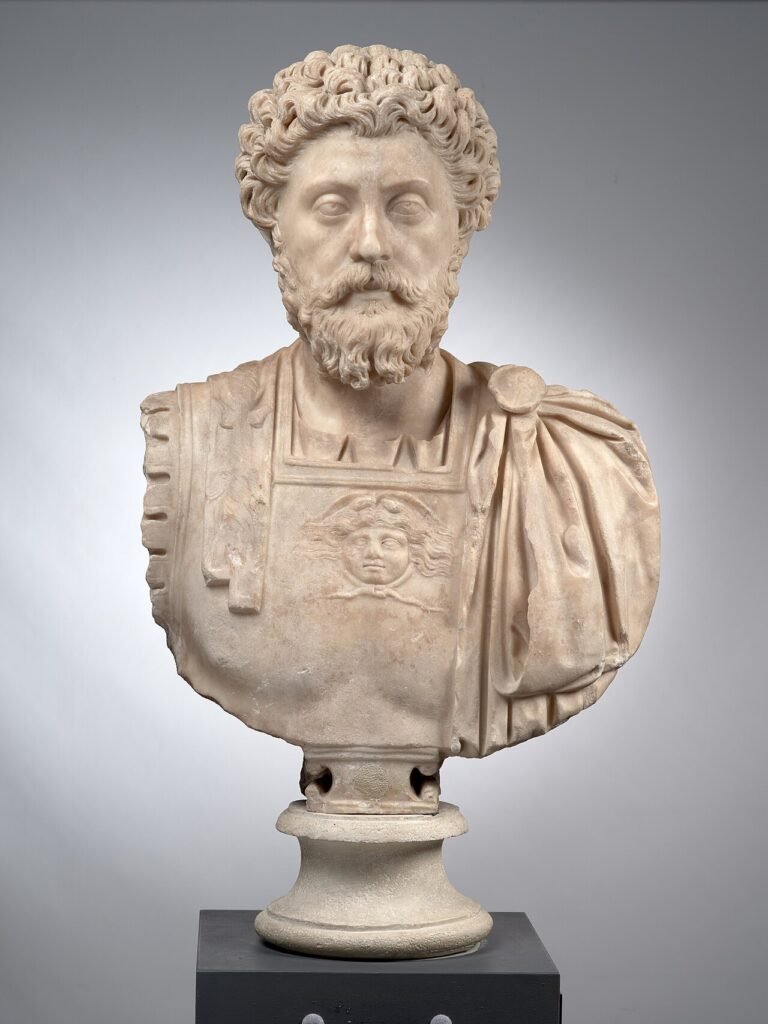
1. Marcus Aurelius: The Stoic Burden of the Purple
The Struggles: Thrust into supreme authority over the Roman Empire at its zenith, Marcus Aurelius faced a relentless succession of catastrophic crises: the devastating Antonine Plague that decimated his legions, endless brutal warfare along the icy Danube frontier, economic collapse, the betrayal and armed rebellion of his trusted general Avidius Cassius, and the deaths of eight of his young children.
The Achievement: Remembered as the last of the “Five Good Emperors,” Marcus governed with philosophical humility, absolute devotion to the public welfare, and judicial fairness. Rather than becoming tyrannical or bitter, he used Stoic philosophy to master his internal emotional state.
The Landmark Book: Meditations. Written as a private nighttime journal in military tents along the northern frontier, Meditations was never intended for public publication. It represents one of the most intimate cognitive records of self-discipline in human history. In its pages, Marcus continuously reminds himself to reject vanity, accept mortality without fear, treat adversaries with patience, and recognize that while we cannot control external circumstance, we hold complete command over our internal judgment.
Meditations — Marcus Aurelius (Translated by Gregory Hays)
The quintessential handbook on emotional resilience, duty, and maintaining mental quietude amidst chaos and heavy responsibility.
Explore on Amazon →2. Viktor E. Frankl: Discovering Meaning in the Abyss
The Struggles: A prominent Viennese neurologist and psychiatrist, Frankl was stripped of his medical credentials, his home, and his identity by the Nazi regime. He endured three brutal years across four concentration camps, including Theresienstadt, Auschwitz, and Dachau. His father, mother, brother, and pregnant wife were all murdered in the camps.
The Achievement: Founder of Logotherapy (the “Third Viennese School of Psychotherapy”), which posits that the primary human drive is not the pursuit of pleasure (Freud) or power (Adler), but the discovery of meaning. Frankl’s work transformed existential psychology and trauma recovery worldwide.
The Landmark Book: Man’s Search for Meaning (1946). Written in just nine days following his liberation, Frankl’s masterpiece is divided into a searing psychological memoir of camp survival and an introduction to logotherapy. His foundational thesis has comforted millions: even in conditions of utter degradation, human beings retain the ultimate spiritual freedom—the freedom to choose one’s attitude in any given set of circumstances. He proved that despair is suffering without meaning, and that a person with a “why” to live can bear almost any “how.”
Man’s Search for Meaning — Viktor E. Frankl
A towering monument of psychological literature proving that human dignity and purpose can outshine even the darkest human cruelty.
Explore on Amazon →3. Nelson Mandela: The Discipline of Magnanimity
The Struggles: Targeted by the brutal South African apartheid regime, Mandela was sentenced to life imprisonment in 1964. He spent 27 agonizing years behind bars—18 of them in a damp, seven-foot concrete cell on Robben Island, enduring backbreaking manual labor in a lime quarry that permanently damaged his eyesight and lungs, while cut off from his children and family.
The Achievement: Leader of the African National Congress, Nobel Peace Prize laureate (1993), and the first democratically elected Black President of South Africa. Mandela miraculously averted a widely predicted catastrophic racial civil war by modeling reconciliation, forgiveness, and democratic governance.
The Landmark Book: Long Walk to Freedom (1994). Begun secretly in prison with manuscripts hidden in garden beds, Mandela’s autobiography is an epic masterclass in moral endurance and strategic patience. The book details how he transformed the prison into a “university,” studying Afrikaans to understand the psychology of his jailers and learning that “to be free is not merely to cast off one’s chains, but to live in a way that respects and enhances the freedom of others.”
Long Walk to Freedom — Nelson Mandela
The triumphant autobiography of a statesman who outlasted 27 years of captivity to forge a democratic nation through radical reconciliation.
Explore on Amazon →4. Abraham Lincoln: Melancholy Transformed into Moral Purpose
The Struggles: Born into frontier poverty in a dirt-floor log cabin, Lincoln suffered the early deaths of his mother, sister, and sweetheart Ann Rutledge. Throughout his adult life, he wrestled with severe, debilitating clinical depression (then termed “melancholy”) that brought him to the brink of collapse multiple times. As President, he endured the agony of losing his beloved son Willie while bearing the unfathomable casualty counts of the American Civil War.
The Achievement: 16th President of the United States who preserved the Union, issued the Emancipation Proclamation, championed the 13th Amendment abolishing slavery, and delivered the Gettysburg Address—one of the supreme orations in world history.
The Landmark Study: Lincoln’s Melancholy: How Depression Challenged a President and Fueled His Greatness by Joshua Wolf Shenk. Modern historical scholarship reveals that Lincoln’s greatness was not despite his depression, but inextricably linked to it. The tools Lincoln developed to survive severe inner darkness—radical empathy, profound patience, self-examination, and an ironclad sense of historical purpose—enabled him to navigate the greatest national catastrophe in American history without succumbing to cynicism or hatred.
Lincoln’s Melancholy — Joshua Wolf Shenk
A revelatory biography exploring how Abraham Lincoln channeled severe inner darkness into extraordinary leadership and moral fortitude.
Explore on Amazon →5. James Baldwin: The Unflinching Moral Conscience
The Struggles: Raised in severe poverty in Harlem by a rigid and tyrannical stepfather, Baldwin endured intense racial hostility, economic destitution, and the agony of being an outsider in Jim Crow America. Seeking emotional breathing room to survive and write, he fled to Paris with just forty dollars in his pocket, writing in freezing, unheated hotel rooms.
The Achievement: One of the supreme essayists, novelists, and social critics in the history of the English language. A vital intellectual voice of the Civil Rights movement whose literary precision exposed the psychological costs of white supremacy on both the oppressed and the oppressor.
The Landmark Book: The Fire Next Time (1963). Composed of two letters—including a deeply moving letter to his nephew on the 100th anniversary of the Emancipation Proclamation—Baldwin’s masterpiece is a tour-de-force of moral urgency and psychological depth. Baldwin famously warned that hatred corrupts the person who hates, arguing that true maturity requires looking at human reality without delusion and insisting on love as an active, courageous force for societal transformation.
The Fire Next Time — James Baldwin
An electric, luminous work of non-fiction exploring race, humanity, and the urgent moral courage required to heal a fractured nation.
Explore on Amazon →6. Mahatma Gandhi: The Alchemy of Non-Violent Resistance
The Struggles: In his youth, Mohandas Gandhi suffered from paralyzing social anxiety and stage fright—fleeing a courtroom during his first case as a young lawyer in Bombay because he was too terrified to speak. Moving to South Africa, he experienced severe racial discrimination, including being physically ejected from a first-class train carriage at Pietermaritzburg. He subsequently endured multiple imprisonments, violent assaults, and agonizing hunger strikes.
The Achievement: Leader of the Indian independence movement against the British Empire, pioneer of Satyagraha (truth-force and non-violent resistance), and universal inspiration for civil rights movements across the globe, from Martin Luther King Jr. to the anti-apartheid movement in South Africa.
The Landmark Book: The Story of My Experiments with Truth (1927). Written while imprisoned in Yerwada Jail, Gandhi’s autobiography is remarkably self-critical. He avoids self-congratulation, choosing instead to meticulously document his personal struggles with anger, pride, vegetarianism, and self-restraint. His writing shows that monumental social power begins with the unvarnished purification of one’s own motives and daily habits.
The Story of My Experiments with Truth — Mahatma Gandhi
An uncommonly humble memoir detailing how personal moral discipline and non-violence shook the foundation of a global empire.
Explore on Amazon →7. Alan Turing: The Father of Modern Computing
The Struggles: A brilliant but socially idiosyncratic mathematician at Cambridge, Turing worked in high-pressure secrecy at Bletchley Park during World War II. Despite his heroic wartime contributions, he was criminally prosecuted by the British government in 1952 for homosexuality. Forced to choose between prison and chemical castration, Turing endured catastrophic physical and psychological torment before his tragic death in 1954 at age 41.
The Achievement: Conceived the universal Turing machine (the theoretical foundation of all modern digital computers), designed the Bombe electromechanical machine that cracked the German Enigma cipher (shortening WWII by an estimated two to four years and saving over 14 million lives), and pioneered artificial intelligence and mathematical biology.
The Landmark Biography: Alan Turing: The Enigma by Andrew Hodges. Hodges’ definitive biography traces Turing’s peerless intellectual courage alongside his profound personal vulnerability. Turing’s seminal 1950 paper, Computing Machinery and Intelligence, introduced the famous “Turing Test,” anticipating our modern AI landscape by seven decades. His life stands as a sobering reminder of the debt civilization owes to independent thinkers who refuse to conform to societal narrowness.
Alan Turing: The Enigma — Andrew Hodges
The definitive biography of the mathematical visionary whose codebreaking saved millions and whose theories birthed the computer age.
Explore on Amazon →What Their Adversity Teaches Us Today
When examining the lives of Marcus Aurelius, Viktor Frankl, Nelson Mandela, and Abraham Lincoln, an unmistakable pattern emerges: none of them were spared the agonizing frictions of human existence. Their legacy was not forged by escaping hardship, but by developing internal fortitude, moral conviction, and an enduring sense of duty to something larger than their personal comfort.
In our modern era of algorithmic hurry and quick gratification, reading their works acts as a powerful corrective. It reminds us that setbacks and emotional darkness are not proof of failure, but the very terrain upon which authentic character, wisdom, and inner steadiness are built.
Continue exploring our companion essays on monumental books by history’s famous women, cultivate focus with our guide on deep reading neuroscience, and discover daily quietude in our Mindful Living Hub and the Current Scholar Journal.
Questions on Famous Men in History and Their Struggles
How did Viktor Frankl find meaning in concentration camps?
In his book Man’s Search for Meaning, Frankl documented that even under extreme suffering, humans retain the freedom to choose their attitude and find meaning through work, love, or the courage with which they bear unavoidable adversity.
Why is Marcus Aurelius’s Meditations still relevant today?
Written during plague and warfare, Meditations offers timeless Stoic insights on emotional regulation, focusing only on what is within our control, and resisting anger, anxiety, and external chaos.
How long was Nelson Mandela imprisoned before becoming president?
Nelson Mandela spent 27 years in prison (1964 to 1990), with 18 years on Robben Island, before leading South Africa through peaceful democratic transition and becoming its first Black president.
How did Abraham Lincoln’s depression affect his leadership?
As explored in Joshua Wolf Shenk’s Lincoln’s Melancholy, Lincoln’s lifelong struggle with severe depression cultivated deep empathy, intellectual realism, and the extraordinary patience required to guide the nation through the Civil War.